
🏗️ J Kumar Infraprojects
📋 About J Kumar Infraprojects
J Kumar Infraprojects Limited is one of India’s most respected infrastructure construction companies, headquartered in Mumbai. Founded by the Gupta family and listed on the NSE and BSE, the company has carved out a formidable niche in urban civil infrastructure — specialising in metro rail corridors, elevated flyovers, road over bridges, underground tunnels, marine works, and irrigation projects.
What sets J Kumar apart from generic civil contractors is its deep technical expertise in complex, high-value urban projects. The company has been a trusted execution partner for prestigious clients including the Mumbai Metropolitan Region Development Authority (MMRDA), Delhi Metro Rail Corporation (DMRC), the National Highways Authority of India (NHAI), and various state Public Works Departments (PWDs).
With over three decades of construction experience, J Kumar has successfully delivered landmark projects like Mumbai Metro Line 3 (the underground Aqua Line), multiple flyovers across Mumbai, and several road packages under Bharatmala. The company’s strong order book, consistent execution track record, and government-backed clientele make it a compelling infrastructure play in India’s urbanisation story. As of 2026, with India continuing its unprecedented infrastructure investment cycle, J Kumar Infraprojects stands at a strategic inflection point. 🏆
🌐 Official website: J Kumar Infraprojects Official Website
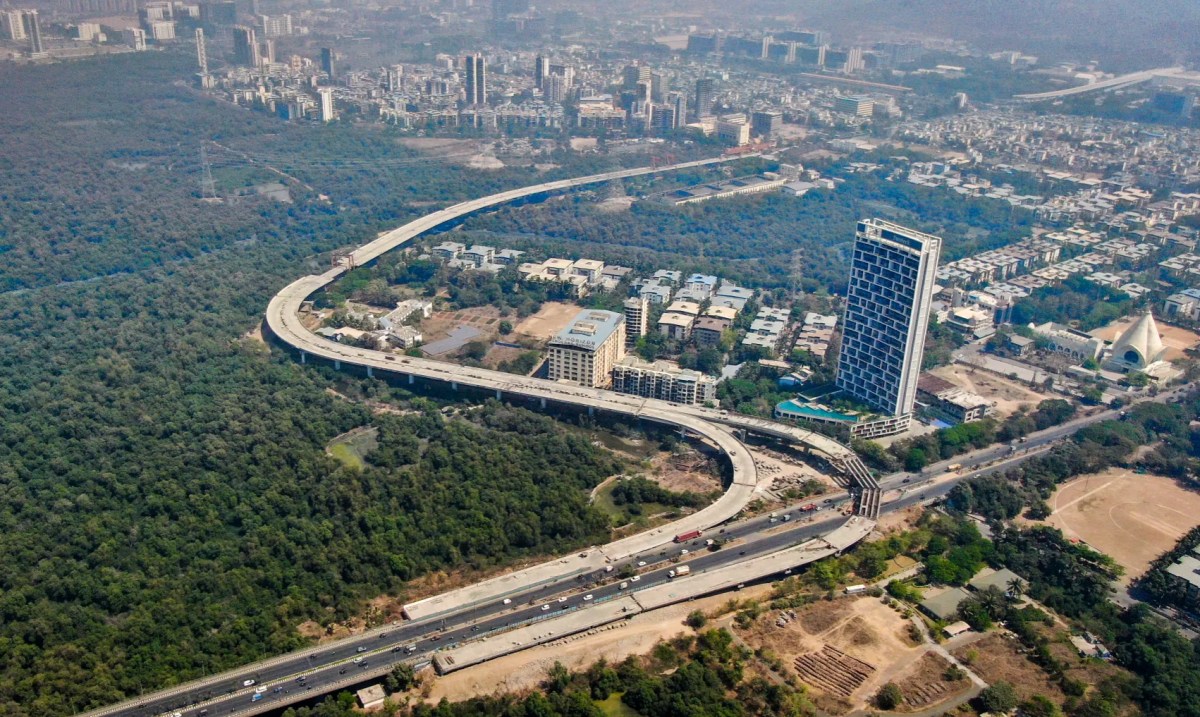
🚀 Expansion Plans
J Kumar Infraprojects has laid out an ambitious multi-year growth blueprint that leverages India’s booming urban infrastructure investment cycle. Here’s what the company’s strategic direction looks like heading into 2026 and beyond:
- 📍 Geographic Diversification: Historically concentrated in Maharashtra, J Kumar has been actively bidding for and winning projects in Delhi-NCR, Bengaluru, Hyderabad, and Pune. This geographic spread reduces dependency on any single state government’s capital expenditure cycle and opens up a dramatically larger addressable market.
- 🚇 Metro Rail Dominance: With Phase 2 and Phase 3 expansions of metro networks announced across 20+ Indian cities under the Smart Cities Mission and AMRUT 2.0, J Kumar is positioning itself as the go-to contractor for underground and elevated metro construction. The company is actively pursuing packages in Mumbai Metro Lines 7A, 9, and 10, as well as Pune Metro extensions.
- 🛣️ Bharatmala & NHAI Packages: The company has been scaling up its NHAI bid pipeline, targeting expressway and highway packages in western and central India. This diversifies revenue away from pure metro work into high-value road infrastructure.
- 🔧 Equipment Modernisation: To handle increasingly complex projects (deeper tunnels, larger span bridges), J Kumar has been investing in advanced tunnel boring machines (TBMs) and specialised construction equipment — giving it a competitive moat in technically challenging bids.
- 💼 Order Book Ambition: Management has publicly targeted an order book of ₹25,000–30,000 crore over the next 2–3 years, which would provide 5–6 years of revenue visibility at current execution rates. This is a significant confidence signal for long-term investors. 🚀
The expansion strategy is well-timed — India’s Union Budget has consistently earmarked ₹10–11 lakh crore annually for capital expenditure, with urban mobility and transportation receiving a lion’s share. J Kumar’s execution capabilities and government relationships put it squarely in the path of this capital flow. 💰
✅ Key Positives
- ✅ Massive, Visible Order Book: J Kumar’s consolidated order book stands at approximately ₹20,000–22,000 crore, offering exceptional multi-year revenue visibility. This is arguably the single most important metric for an infrastructure company — it means revenues are locked in well before they appear on the P&L.
- ✅ Niche Technical Expertise: Underground metro tunnelling and complex marine/bridge work require specialised skills, equipment, and certifications that most contractors lack. This acts as a powerful competitive moat, limiting the number of credible bidders on high-value packages and protecting margins.
- ✅ Government Client Base = Low Credit Risk: J Kumar’s clients are predominantly central and state government bodies (MMRDA, DMRC, NHAI, PWDs). While payment timelines can stretch, the credit risk is virtually nil — unlike private sector infrastructure clients who carry default risk. 🏛️
- ✅ Attractive Valuation Metrics: With a PE of just 9.67x and a PB of only 1.1x, J Kumar trades at a significant discount to its sector peers and to its intrinsic earnings power. For a company growing revenues at 15%+ annually, this represents a compelling value investing opportunity. 📊
- ✅ Healthy ROCE of 18.4%: A Return on Capital Employed of 18.4% is commendable for a capital-intensive infrastructure business. It signals that management is deploying capital efficiently and generating genuine economic value — not just booking revenues at thin margins.
- ✅ India’s Infrastructure Supercycle: The macro tailwind is perhaps the strongest in a generation. India is spending ₹10+ lakh crore annually on infrastructure, with a special focus on urban mobility. Companies like J Kumar that sit at the execution end of this cycle are positioned for sustained growth through the decade. 🇮🇳
- ✅ Experienced Promoter Management: The Gupta family promoters bring deep domain knowledge and long-standing government relationships built over 30+ years — an intangible asset that cannot be easily replicated by new entrants or financial investors. 🤝
⚠️ Key Concerns
- ⚠️ Geographic Concentration Risk: Despite diversification efforts, a substantial portion of revenues still originates from Maharashtra. Any slowdown in Mumbai’s infrastructure pipeline or state government fiscal stress could materially impact near-term order inflows.
- ⚠️ Working Capital Stress: Infrastructure companies are notorious for stretched receivables. J Kumar’s working capital cycle can extend to 150–180 days, creating periodic cash flow pressure and dependency on short-term borrowings.
- ⚠️ Execution Risk on Large Projects: As projects grow larger and more complex (deeper tunnels, tighter urban environments), the risk of cost overruns, geological surprises, or timeline delays increases — which can compress margins on individual contracts.
- ⚠️ Input Cost Volatility: Steel, cement, and diesel — the three largest cost components — are subject to global commodity cycles. Sustained inflation in these inputs without corresponding escalation clauses can erode profitability. 🔴
🔍 SWOT Analysis
J Kumar Infraprojects presents a compelling SWOT profile for the discerning value investor. Its strengths lie in a massive order book, technical specialisation in metro and tunnel construction, and blue-chip government clients that virtually eliminate credit risk. The company’s ROCE of 18.4% demonstrates efficient capital deployment — rare in infrastructure. Weaknesses include geographic concentration and working capital intensity. However, opportunities are substantial: India’s ₹111 lakh crore National Infrastructure Pipeline, metro expansions in 20+ cities, and the Bharatmala highway programme create a decade-long runway. The primary threats are input cost inflation and competitive intensity from larger peers like L&T. 🏗️
🔍 SWOT Analysis
A SWOT analysis gives investors a structured snapshot of a company’s internal capabilities and external environment. Strengths and Weaknesses reflect what the company controls today — its moat, balance sheet, and operational edge or gaps. Opportunities highlight macro tailwinds and growth runways ahead, while Threats flag risks that could impair long-term value. Use this matrix alongside the financial snapshot above to form a well-rounded view before making any investment decision.
💪 STRENGTHS
- Strong order book exceeding ₹20,000 crore providing multi-year revenue visibility
- Proven expertise in complex metro rail and underground tunnel construction
- Long-standing relationships with government bodies like MMRDA, DMRC, and NHAI
- Consistent revenue growth driven by India’s massive urban infrastructure push
⚠️ WEAKNESSES
- High geographic concentration with heavy reliance on Mumbai and Maharashtra projects
- Working capital intensive business model leading to stretched cash conversion cycles
- Relatively modest ROE compared to capital employed in large civil projects
🚀 OPPORTUNITIES
- India’s ₹111 lakh crore National Infrastructure Pipeline offering decades of project pipeline
- Expansion into new geographies like Delhi-NCR, Bengaluru, and Pune metro projects
- Growing demand for urban mobility infrastructure including metro phase expansions
🔴 THREATS
- Policy delays and government budget cuts can stall project execution timelines
- Rising input costs (steel, cement, labour) squeezing construction margins
- Intense competition from larger L&T, NCC, and HCC in bid processes
* SWOT is based on publicly available information and analyst estimates. Not a buy/sell recommendation.
📈 Profit & Loss (Last 5 Years)
J Kumar Infraprojects has delivered consistent revenue and profit growth over the past five years, reflecting strong order execution and an expanding project portfolio. Revenues have grown from approximately ₹2,180 crore in FY22 to an estimated ₹4,850 crore in FY26E — a robust 3-year CAGR of approximately ~15%. Net profits have followed an even stronger trajectory, rising from ₹165 crore in FY22 to an estimated ₹465 crore in FY26E, driven by operating leverage as project scale increases and overhead costs get spread over a larger revenue base. 📊
* Estimated figures in ₹ Crores. Source: Annual reports & public disclosures. Not guaranteed to be accurate.
🔴 Risk Factors
- 🔴 Policy & Regulatory Risk: Infrastructure projects are subject to land acquisition delays, environmental clearances, and inter-governmental coordination issues that can stall execution for quarters at a time, impacting revenue recognition.
- 🔴 Interest Rate Sensitivity: J Kumar maintains working capital lines of credit. A rising interest rate environment increases borrowing costs, which can pressure net profit margins even if operational performance remains strong.
- 🔴 Litigation & Arbitration: Large civil contracts often lead to disputes over scope changes, price escalation, or delay penalties. Adverse arbitration outcomes can result in unexpected provisions hitting the P&L.
- 🔴 Key Man Risk: The company’s strong government relationships and project-winning ability are partly dependent on promoter-level engagement. Any leadership transition or management bandwidth issues could impact bidding success rates.
- 🔴 Market Concentration: If government capital expenditure slows due to fiscal consolidation pressures (election cycles, revenue shortfalls), the entire urban infrastructure sector faces a pipeline drought that directly impacts new order inflows.
- 🔴 Commodity Price Shocks: A sudden spike in global steel or oil prices — as seen in 2022 — can rapidly compress margins on fixed-price contracts, particularly for projects without adequate price escalation clauses. ⚠️
📊 Value Investing Snapshot
Here is a comprehensive snapshot of J Kumar Infraprojects’ key valuation and financial health metrics as of 2026. Use this alongside the Futurecaps Intrinsic Value Calculator to assess margin of safety. 💡
* Revenue CAGR (3Y) and Profit CAGR (3Y) are analyst estimates based on publicly available data and management commentary. All other metrics are sourced from live Screener.in data. This is not financial advice.
Legend: 🟢 Green = Strong/Attractive | 🟡 Yellow = Moderate | 🔴 Red = Weak/Caution
🏆 About Futurecaps
Futurecaps is a SEBI-registered investment research platform trusted by thousands of retail investors across India. Our mission is simple: democratise high-quality stock research that was previously accessible only to institutional investors and HNIs. Our team of experienced analysts digs deep into balance sheets, annual reports, and industry trends to identify multibagger opportunities before they hit the mainstream radar. Whether you’re a first-time investor or a seasoned market participant, Futurecaps gives you the research edge you need to invest with conviction and confidence. Join our growing community of smart, informed investors today! 🚀💰
💡 About Value Investing
Value investing is the time-tested philosophy of buying great businesses at prices below their intrinsic value — the approach championed by Benjamin Graham and Warren Buffett. The core idea is elegant: if a stock trades at a significant discount to what the underlying business is truly worth, the margin of safety protects your downside while the market’s eventual recognition of fair value drives spectacular returns. Key metrics include PE ratio, PB ratio, ROCE, ROE, and debt levels. Want to calculate the intrinsic value of any stock yourself? Use the Futurecaps Intrinsic Value Calculator — it’s free, fast, and built for Indian investors. 📊
🎁 Get FREE Multibagger Stock!
Join thousands of smart investors. Get our expertly researched FREE multibagger stock recommendation — absolutely free!